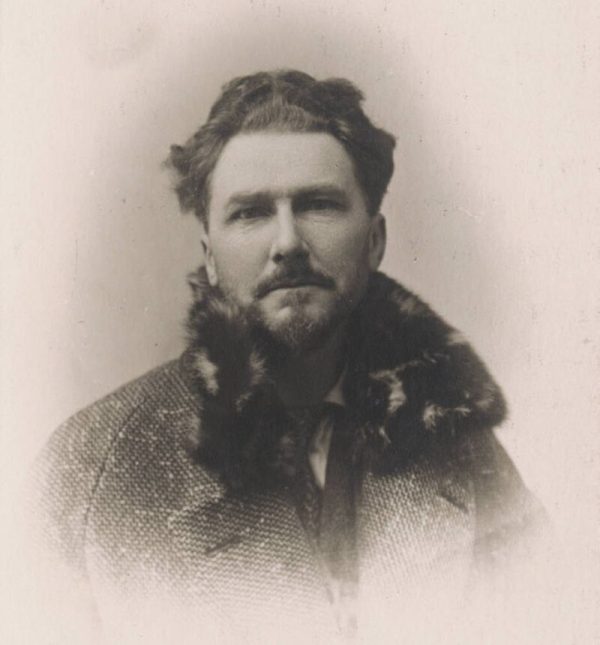
Pubblichiamo la seconda parte della prima sezione di Hugh Selwyn Mauberley, opera del 1920 di Ezra Pound, nella traduzione di Francesco Zevio. Per una breve introduzione all’Autore e all’opera, rinviamo il Lettore alla PRIMA PARTE, in cui il verso di Pound affronta la guerra orrenda, la Prima mondiale, il primo suicidio europeo. In questa seconda parte invece, il poeta dipinge a rapide pennellate, che Zevio ricrea con vivezza e arguzia e rendendocele contemporanee, quadretti di urbana vita londinese, scenette di lussuosa miseria tra cenacoli decadenti di una società che acquisisce il suo capitale prostituendo la sua mente. Segue il testo originale.
Federico Pietrobelli
Poesie VI-XIII da
Hugh Selwyn Mauberley (1920)
di Ezra Pound
a cura di Francesco Zevio
YEUX GLAUQUES
Per Gladstone c’era ancora del rispetto
quando furono pubblicati
i King’s Treasuries di Ruskin… Rossetti
e Swimburne? Ancora maltrattati.
Il fetido Buchanan alzò la voce
quando la testa da fauno di Lizzie
divenne un “passatempo
per adulteri e artisti.”
I cartoni di Burne-Jones
ne hanno preservato gli occhi ‒
eppure, alla Tate, insegnano
a entusiasmarsi per Cophetua… allocchi.
Tenui come acqua di ruscello,
con uno sguardo perso.
Il Rubayat inglese era già nato
morto, a quel tempo.
Il tenue, chiaro sguardo ‒ lo stesso
che guizza ancora, faunesco dal viso
assente e passivo, dismesso…
“E poi l’affare Jenny…”
Sconvolta perché il mondo
non prenda sul serio
del suo ultimo “pappone”
l’adulterio…
SIENA MI FE’, DISFECEMI MAREMMA
Tra ossa in bottiglia e feti in salamoia
indaffarato a rifinire il catalogue
trovai l’ultimo erede di una famiglia
senatoria di Strasburgo ‒ Monsieur Verog.
Per due ore parlò di Gallifret
di Dowson, del Rhymer’s Club…
di come Johnson (Lionel) tirò le cuoia
cadendo giù da uno sgabello, al pub.
Ma non si trovò alcuna traccia d’alcool
durante l’autopsia (privata)
tessuti preservati ‒ la pura mente
salì a Newmann, nel whisky che picchiava.
Dowson trovava le zoccole meno care degli hotel,
Headlam beh, per tirarsi su… Image imbevuto
di rapimenti bacchici, Tersicore e la chiesa.
Così parlava l’autore del Dorian Mood,
M. Verog, non al passo col decennio
distaccato dai suoi contemporanei
ignorato dai giovani, negletto
per queste sue chiacchiere da vecchio.
BRENNBAUM
Gli occhi limpidi celesti
il volto tondo, da bimbetto
da ghette a colletto, una rigidezza
che mai si scioglie in grazia ‒
i gravi ricordi dell’Horeb, il Sinai e i quarant’anni
mostrati solo quando la luce appare
e cade stabile sul volto
di Brennbaum, “l’Impeccabile”.
MR. NIXON
Nella cabina oro-crema del suo yacht
Mr. Nixon mi consigliò, con tatto, di procedere
senza il minimo ritardo. “Considera
attentamente i recensori.
Ero povero come te
all’inizio sì, certo, mi son beccato
un anticipo sui diritti, fifty-fifty…” disse Mr. Nixon,
“fai come me, passa in tv
anche se all’inizio non ti pagano.
Fai parlare di te. Son passato da 0 a 2 milioni
di follower, in neanche un anno e mezzo.
La vera pigna in culo
fu M. Dundas.
Non ho mai menzionato nessuno
se non per vendermi ‒ è un buon consiglio
dà retta. Quanto alla letteratura,
senti a me… è solo una gran rottura.
E nessuno riconosce un capolavoro a prima vista.
E smettila coi versi, ragazzo,
non valgono un cazzo.”
Così un’altra volta, in una discussione
con Brugham credo, sullo stesso andazzo:
“non dar testate contro il muro,” mi consigliò,
“accetta l’opinione. I Nineties c’hanno provato
e ci son morti. Non valgono un cazzo.”
X
Sotto un tetto cadente
lo stilista s’è riparato
dal tumulto del mondo,
senza paga, non celebrato
la natura l’accoglie ‒
lui esercita i suoi talenti
con una placida e incolta amante
e la nuda terra ne accoglie i tormenti.
L’ambrosia contro dispute e sofismi
cola qui sotto attraverso il tettaccio ‒
lui ci mette il talento culinario,
stride alla porta il catenaccio.
XI
“Conservatrice di Milesii…”
costumi di mente e sentimento,
magari. Ma a Quartiere Affari
col più baciabanchiere dei milanesi?
No, “milesii” è un’esagerazione.
In lei nessun istinto ha altra origine
se non da ciò che Donna moderna
le insegna convenire alla sua immagine.
XII
“Dafne con le cosce in corteccia
tende verso me le mani-foglie…”
soggettivamente. Nel suo salottino kitsch
attendo gli ordini di Donna Malgioglie,
sapendo che il mio giaccone
non è mai stato della marca e il prezzo
da stimolarle, in petto,
una durevole passione,
dubbioso, in qualche modo, del valore
di una qualche approvazione
da parte di griffati, in materia letteraria
ma mai della sua vocazione…
poesia, il confine delle sue idee,
il limite, incerto… ma un buon mezzo
per fondersi agli strati bassi
per fare l’anima bella col culo degli altri ‒
un amo per pescare l’attenzione
di una casa editrice, la televisione
o in caso di rivoluzione
forse un’amica, una consolatrice.
Ma insomma, via… conduci l’anima
“che le culture più alte hanno nutrito”
a Milano 5, dove
il Cavalier Canaledue è fiorito.
A fianco di questo stradone
il via-etere ha spazzato via
da molto tempo la coltivazione
delle rose di Pieria.
ENVOI
Va’, libro nato muto,
di’ a colei che un giorno mi cantò quel canto di Lawes, 1
se tu conoscessi il canto
quanto hai conosciuto servi,
avresti in te di che perdonare
persino le colpe che grevi pesano su me
ed eternare le sue glorie.
Di’ a colei che diffonde
un tale tesoro nell’aria,
senz’altra cura se non che la sua grazia
vita infonda al momento,
le avrei augurato di vivere
come le rose, posate in magica ambra,
rosso sovraccarico d’arancio – e tutto fatto
un’unica sostanza e colore
sfidando il tempo.
Di’ a colei che cammina
col canto sulle labbra,
ma senza cantarlo, o sapere
chi lo scrisse ‒ qualche altra bocca,
forse graziosa quanto la sua,
potrebbe, in epoche nuove, trovarle adoratori,
quando le nostre due ceneri con quella di Waller 2
giaceranno – strato su strato, nell’oblio –
fino a quando il mutamento avrà infranto
tutto – eccetto
la Bellezza.
Hugh Selwyn Mauberley, VI-XIII
Ezra Pound
19203
YEUX GLAUQUES
Gladstone was still respected,
When John Ruskin produced
“Kings Treasuries”; Swinburne
And Rossetti still abused.
Foetid Buchanan lifted up his voice
When that faun’s head of hers
Became a pastime for
Painters and adulterers.
The Burne-Jones cartons
Have preserved her eyes;
Still, at the Tate, they teach
Cophetua to rhapsodize;
Thin like brook-water,
With a vacant gaze.
The English Rubaiyat was still-born
In those days.
The thin, clear gaze, the same
Still darts out faun-like from the half-ruin’d face,
Questing and passive…
“Ah, poor Jenny’s case”…
Bewildered that a world
Shows no surprise
At her last maquero’s
Adulteries.
“SIENA MI FE’, DISFECEMI MAREMMA”
Among the pickled foetuses and bottled bones,
Engaged in perfecting the catalogue,
I found the last scion of the
Senatorial families of Strasbourg, Monsieur Verog.
For two hours he talked of Gallifet;
Of Dowson; of the Rhymers’ Club;
Told me how Johnson (Lionel) died
By falling from a high stool in a pub …
But showed no trace of alcohol
At the autopsy, privately performed –
Tissue preserved – the pure mind
Arose toward Newman as the whiskey warmed.
Dowson found harlots cheaper than hotels;
Headlam for uplift; Image impartially imbued
With raptures for Bacchus, Terpsichore and the Church.
So spoke the author of “The Dorian Mood”,
M. Verog, out of step with the decade,
Detached from his contemporaries,
Neglected by the young,
Because of these reveries.
BRENNEBAUM
The sky-like limpid eyes,
The circular infant’s face,
The stiffness from spats to collar
Never relaxing into grace;
The heavy memories of Horeb, Sinai and the forty years,
Showed only when the daylight fell
Level across the face
Of Brennbaum “The Impeccable”.
MR. NIXON
In the cream gilded cabin of his steam yacht
Mr. Nixon advised me kindly, to advance with fewer
Dangers of delay. “Consider
“Carefully the reviewer.
“I was as poor as you are;
“When I began I got, of course,
“Advance on royalties, fifty at first,” said Mr. Nixon,
“Follow me, and take a column,
“Even if you have to work free.
“Butter reviewers. From fifty to three hundred
“I rose in eighteen months;
“The hardest nut I had to crack
“Was Dr. Dundas.
“I never mentioned a man but with the view
“Of selling my own works.
“The tip’s a good one, as for literature
“It gives no man a sinecure.”
And no one knows, at sight a masterpiece.
And give up verse, my boy,
There’s nothing in it.”
Likewise a friend of Bloughram’s once advised me:
Don’t kick against the pricks,
Accept opinion. The “Nineties” tried your game
And died, there’s nothing in it.
X
Beneath the sagging roof
The stylist has taken shelter,
Unpaid, uncelebrated,
At last from the world’s welter
Nature receives him,
With a placid and uneducated mistress
He exercises his talents
And the soil meets his distress.
The haven from sophistications and contentions
Leaks through its thatch;
He offers succulent cooking;
The door has a creaking latch.
XI
“Conservatrix of Milésien”
Habits of mind and feeling,
Possibly. But in Ealing
With the most bank-clerkly of Englishmen?
No, “Milésien” is an exaggeration.
No instinct has survived in her
Older than those her grandmother
Told her would fit her station.
XII
“Daphne with her thighs in bark
Stretches toward me her leafy hands”, –
Subjectively. In the stuffed-satin drawing-room
I await The Lady Valentine’s commands,
Knowing my coat has never been
Of precisely the fashion
To stimulate, in her,
A durable passion;
Doubtful, somewhat, of the value
Of well-gowned approbation
Of literary effort,
But never of The Lady Valentine’s vocation:
Poetry, her border of ideas,
The edge, uncertain, but a means of blending
With other strata
Where the lower and higher have ending;
A hook to catch the Lady Jane’s attention,
A modulation toward the theatre,
Also, in the case of revolution,
A possible friend and comforter.
Conduct, on the other hand, the soul
“Which the highest cultures have nourished”
To Fleet St. where
Dr. Johnson flourished;
Beside this thoroughfare
The sale of half-hose has
Long since superseded the cultivation
Of Pierian roses.
ENVOI (1919)
Go, dumb-born book,
Tell her that sang me once that song of Lawes;
Hadst thou but song
As thou hast subjects known,
Then were there cause in thee that should condone
Even my faults that heavy upon me lie
And build her glories their longevity.
Tell her that sheds
Such treasure in the air,
Recking naught else but that her graces give
Life to the moment,
I would bid them live
As roses might, in magic amber laid,
Red overwrought with orange and all made
One substance and one colour
Braving time.
Tell her that goes
With song upon her lips
But sings not out the song, nor knows
The maker of it, some other mouth,
May be as fair as hers,
Might, in new ages, gain her worshippers,
When our two dusts with Waller’s shall be laid,
Sittings on siftings in oblivion,
Till change hath broken down
All things save Beauty alone.
Note ai testi:
- Lawes, Henry (1595-1662): musicista e compositore inglese. ↩︎
- Waller, Edmund (1606-1687): poeta inglese, la sua poesia Go, lovely rose fu musicata da Henry Lawes. ↩︎
- Ezra Pound, Hugh Selwyn Mauberley, The Ovid Press, London 1920. ↩︎
 Lapis Clamans